

Talk to an expert 504-608-4680
Talk to an expert 504-608-4680

Written by Big Easy Pool Builders
Key Takeaways
Quick Answer: A pool build takes about 8 to 12 weeks from design to swim, according to SwimmingPool.com, with HomeGuide putting the gunite construction stretch alone at 6 to 8 weeks. Around Slidell and Madisonville, heavy summer rain and hurricane season can stretch any stage, so plan with some room in the calendar.
Gunite takes longer than some pool types because the concrete is sprayed and cured on site. That’s also why it can take any shape you want. If you’re new to the material, our guide to what a gunite pool is explains the basics. Below is how the schedule usually breaks down, stage by stage.
SwimmingPool.com estimates 1 to 4 weeks for the design phase. This is where you settle the shape, depth, steps, and any spa or water feature. Our post on choosing the right pool size and shape is a good place to start thinking before the first meeting.
Permits also come before any digging, and your parish sets that pace. Our advice for Slidell and Madisonville owners: lock the design early, since changes after the permit is submitted are an easy way to lose time.
According to SwimmingPool.com, digging usually takes only 1 or 2 days, though it budgets about a week for excavation to allow for complications like limited access or utility lines. Next comes the steel, plumbing, and electrical rough-in, which it estimates at 1 to 2 weeks depending on the size and complexity of the pool.
This is where our soft alluvial soil and wet weather come into play. A dig that fills with rainwater or a yard too soft for equipment has to wait. Our advice for Slidell yards: watch the forecast around this stretch, because an open hole and a summer downpour don’t mix.
Shoot day is when the crew sprays gunite over the steel and shapes the floor and walls, steps included. The concrete work itself moves fast. The waiting comes after.
The American Shotcrete Association (ASA) recommends a minimum of 7 days of curing to help control shrinkage in young concrete. It also warns that a lack of curing, plus hot or dry exposure, raises the risk of shrinkage cracking. ASA recommends a minimum of 4,000 psi for pool gunite, measured at 28 days.
That doesn’t mean every step waits a full 28 days. Your builder decides when the shell is ready for tile and the finish coat. What you shouldn’t see is a shell left to bake dry in August heat. Keeping it wet in the first week is part of the job, and it’s worth asking who handles it on your project. You can read more about how we approach the shell on our gunite pool construction page.
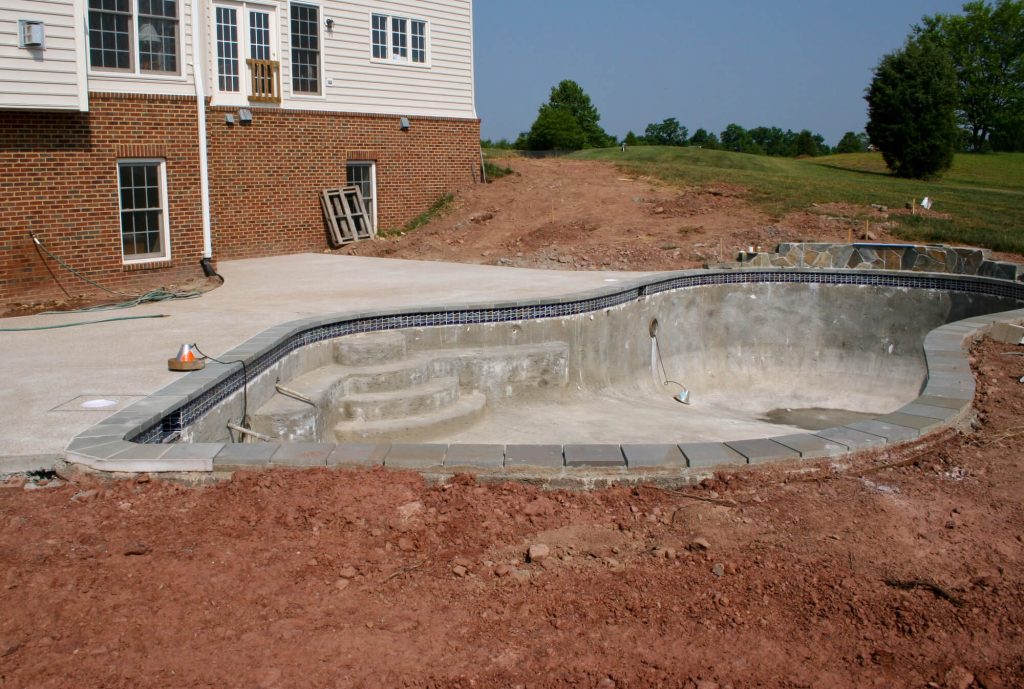
SwimmingPool.com estimates 1 to 3 weeks for the gunite and plastering stage and 1 to 4 weeks for deck and landscaping work. On a typical job, the finishing stretch covers the pieces below, though the exact order varies by builder and site:
The finish you pick now is the one you’ll renew years down the road, so it’s worth knowing the long-term side too. Our guide to pool replastering costs in New Orleans covers what that looks like.
Afternoon storms are a normal part of a Louisiana summer, and they hit the early stages hardest. Excavation and deck work both need ground dry enough to work on. A few wet days in a row can push the next crew back.
The National Hurricane Center lists the Atlantic hurricane season as June 1 to November 30, with most activity between mid-August and mid-October. A named storm in the Gulf doesn’t have to hit Slidell or Madisonville to pause a job site. Our advice: ask your builder how materials and equipment get secured when a storm threatens.
Heat speeds up drying, which is exactly what a fresh gunite shell doesn’t want. That’s one reason curing gets extra attention in July and August.
SwimmingPool.com’s 8 to 12 weeks works out to roughly 2 to 3 months from first meeting to first swim, before any weather delays. HomeGuide suggests building during the off-season or colder months as a way to save money, and our mild winters make that realistic here. Starting in fall or winter also puts most of the construction outside the peak of storm season.
Our swim season is long, so there’s no bad month to have a pool. But if Memorial Day is the goal, begin design talks well before spring.
Whether you’re planning a custom pool with an attached spa or a simpler rectangle, fewer mid-build changes means fewer delays.
SwimmingPool.com gives 8 to 12 weeks on average, design and permits included. It notes that a gunite pool takes a little longer, since the crew needs time to plaster and the gunite can take up to a week to cure.
ASA recommends at least 7 days of curing, and its strength target is measured at 28 days. Your builder sets the exact timing for the finish coat.
Usually. HomeGuide notes that build time depends on the pool’s size and how much site prep your property needs. Features like a spa or waterfall add steps too.
Not for the whole season. Work can continue on clear weeks, with a pause to secure the site when a storm threatens. Plan for a few lost days if one comes close.
We’ll walk your yard, map out the stages, and give you a realistic schedule for your lot. We build across the Northshore, including Slidell and Madisonville, plus New Orleans and Baton Rouge.
Request a free consultation or call (504) 608-4680.
 By Admin
  Sep 28, 2026


