Talk to an expert 504-608-4680
Talk to an expert 504-608-4680

Written by Big Easy Pool Builders
Key Takeaways
Quick Answer: A well-built gunite pool shell can last 50 years or more, according to HomeGuide’s July 2025 gunite guide. The finish coat won’t last that long. HomeGuide puts resurfacing at every 7 to 15 years, so a St. Rose family keeping a pool for decades should budget for several new interior finishes.
That split between shell and surface is the most useful thing to understand before you build. When we walk a backyard in St. Rose, the question we hear isn’t really “how long will the concrete last?” It’s “how long until I’m paying for this again?” Those have different answers, and the second one depends a lot on how the water is cared for.
A gunite pool has 3 layers. First comes a grid of steel rebar tied to follow the shape of the excavation. Next comes the gunite itself, a dry mix of cement and sand that travels through a hose and meets water at the nozzle, then hits the steel at high speed. Last comes the interior finish you actually touch: plaster, a pebble or quartz aggregate, or tile.
If you want the full background on the material and how it differs from shotcrete, our explainer on what a gunite pool is and why local builders use it covers it in detail. This post stays on the 2 questions that come after: how long it lasts, and whether it’s worth the money.
The American Shotcrete Association (ASA) sets out the basics that decide how a shell ages. It recommends a 28-day compressive strength of at least 4,000 psi for dry-mix gunite and a minimum of 7 days of curing. It also warns that a lack of curing, made worse by hot or windy weather, raises the risk of shrinkage cracking.
ASA also notes that pools go through volume changes from temperature swings between summer and winter. That’s normal concrete behavior, and it’s one reason the steel layout matters as much as the concrete.
St. Rose sits on the east bank of St. Charles Parish, on the same soft alluvial delta soil found across the metro. That soil can shift and settle, and a pool shell has to be designed for the lot it sits on. We look at drainage, how water moves across the yard in a heavy summer storm, and how the shell will be supported before we ever talk about shapes. Our gunite pool construction page explains how we approach the structure.
HomeGuide’s guide gives 2 figures in 2 places: resurfacing every 7 to 15 years in its cost section and every 10 to 15 years in its FAQ. We use the wider 7 to 15 year window, because the finish you choose and the care it gets move that number around.
Standard white plaster sits at the shorter end. Pebble and quartz finishes tend to last longer. Water chemistry decides a lot of the rest. Our post on how often to resurface a pool walks through the warning signs, and our pool replastering page explains what the job involves.
HomeGuide also recommends an acid wash every 3 to 5 years. An acid wash strips a thin layer from the surface to remove stains and buildup, so it’s a tool to use when needed, not a ritual.
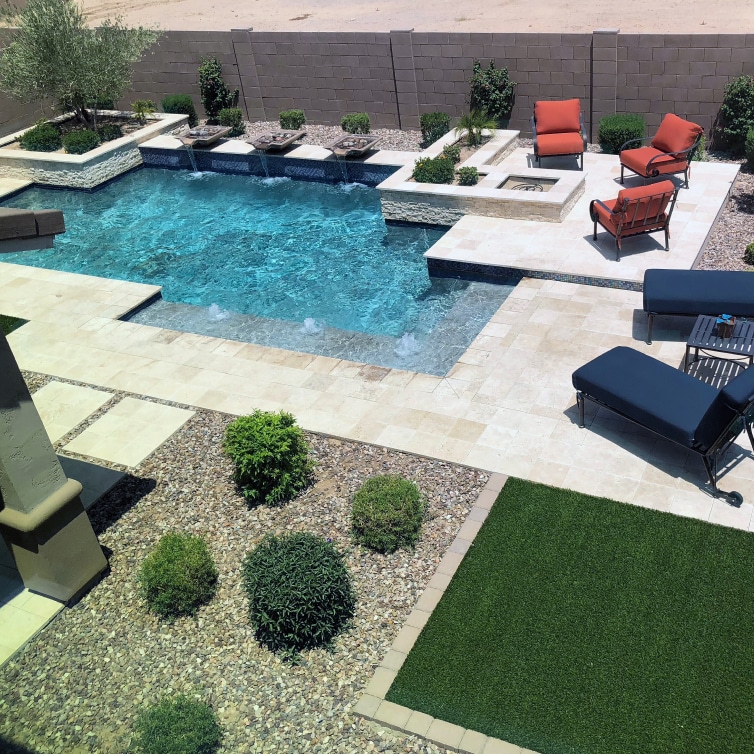
It depends on how long you plan to stay and what you want the pool to do. Gunite tends to make sense in 3 situations: you want a shape built around your yard, you plan to keep the house for a long time, or you want a spa or tanning ledge formed into the same structure. It’s a harder sell if the lowest upfront cost or the fastest install is your top priority.
Our honest advice: think in terms of the shell’s lifespan versus the finish’s lifespan. If you plan to stay in your St. Rose home for many years, expect at least one refinish along the way while you keep a structure built for your lot. If you expect to move in 3 years, the math looks different. If you’re still at the “should we build at all” stage, our post on inground vs. above-ground pools covers the bigger choice.
Around St. Rose and the river parishes, the swim season runs long, the summer sun is intense, and afternoon thunderstorms are frequent. Long seasons mean more hours of use per year, which helps the value side of the equation. Strong sun and heavy rain work against the finish, which is why water balance matters so much here. A shell that’s well built and a finish that’s well cared for is the combination that gets you toward the long end of every range in this post.
Some cost guides cite very long figures, but we stick with HomeGuide’s 50+ year average for the shell. Actual life depends on construction quality, the soil under the pool, and maintenance.
Yes. Gunite is concrete placed by spraying a dry mix that’s hydrated at the nozzle. The name describes the method, not a different material.
Usually the interior finish. Plaster is the most common finish, and it’s the layer that etches or stains first. Tile and coping can also need repairs over time.
That depends on the buyer and the neighborhood, so we don’t promise a number. A well-kept pool with a sound shell is easier to sell than one that needs immediate work.
If you’re weighing a gunite pool for a home in St. Rose or elsewhere in St. Charles Parish, we’ll walk the yard with you and talk through shape, structure, and the finish that fits how you’ll use it. Browse our custom pool work for ideas.
Request a free consultation or call (504) 608-4680.
 By Admin
 Oct 6, 2026