

Talk to an expert 504-608-4680
Talk to an expert 504-608-4680

Written by Big Easy Pool Builders
Key Takeaways
Quick Answer: Keep the water balanced, brush the walls and floor every week, run the pump and filter daily, and retest after heavy rain. The CDC recommends a pH of 7.0 to 7.8 and at least 1 ppm free chlorine. In Baton Rouge, long hot summers and frequent storms make consistent testing the most important habit.
A gunite pool is a concrete shell with a finish on top, usually plaster, pebble, or quartz. The shell is built to last for decades. The finish is what you’re really maintaining week to week, and how you treat it decides how soon you’ll be paying to resurface. Our post on how long a gunite pool lasts explains that split in more detail.
The CDC’s home pool water treatment guidance gives the 2 numbers every owner should know:
The CDC recommends testing chlorine and pH at least twice a day, and more often when lots of people are swimming. It also notes that sunlight reduces chlorine levels, which matters a lot under a south Louisiana sun.
For a cement-based finish, total alkalinity and calcium hardness matter too. Water that’s out of balance can etch plaster or leave scale behind. A good test kit and a steady routine prevent most finish problems we’re called out to look at. If you’ve converted to a salt system, our post on salt water vs. chlorine pools covers how that changes your routine.
Brush at least once a week, and more in peak summer. SwimmingPool.com explains that gunite’s porous surface makes it more prone to algae, so it needs more brushing and closer attention to chemicals than smoother pool types.
Use a brush suited to your finish. A stiff brush works on plaster and pebble, while softer bristles suit tile lines. Pay attention to steps and corners, since that’s where water circulates least and algae tends to start. A quick brush before you vacuum lifts debris so the filter can catch it.
National Weather Service normals for Baton Rouge’s Ryan Field (1991 to 2020) show average highs above 90 degrees from June through August. Warm water and strong sun burn through chlorine faster, which is why the CDC’s twice-a-day testing advice is worth taking seriously in July.
The same normals put Baton Rouge’s average annual rainfall at about 62 inches. A big afternoon storm can dilute your chlorine and shift pH. It also washes leaves and yard debris into the water. After heavy rain, skim first, run the pump, then test and adjust. If the water level rises too high, lower it so the skimmer can do its job.
Spring around Baton Rouge brings a yellow film of pollen on many pools, and oak and pine debris can pile up in skimmer baskets fast. Empty baskets more often in those weeks and brush the waterline, since organic debris eats chlorine and can stain a light plaster finish if it sits on the floor.
Baton Rouge’s January average is about 52 degrees, with average lows near 42. Many owners keep the pool running year-round. Even when you’re not swimming, keep circulating and testing, because a neglected pool in February becomes a green pool in March. Our winter pool care guide covers the slower months.
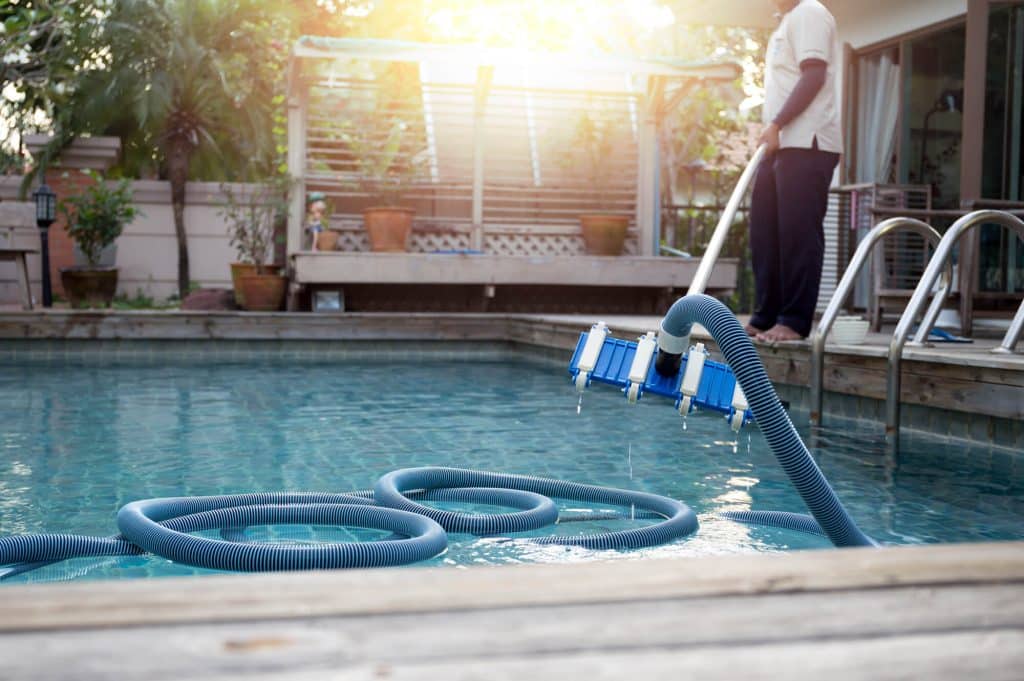
Here’s the routine we suggest to Baton Rouge owners. Adjust it to how often you swim.
Keep an eye on the equipment too. A pump that’s struggling or a heater that won’t fire shows up in your water quality before long. Our guide to common pool equipment failures helps you spot trouble early, and our pool equipment repair team can take it from there.
HomeGuide’s gunite guide recommends an acid wash every 3 to 5 years and puts resurfacing at every 7 to 15 years. An acid wash removes a thin layer of the finish to clear stains, so we treat it as a fix for a real problem, not a schedule item.
Signs your finish is wearing out include rough patches that snag swimsuits, stains that won’t brush off, and spots that sound hollow when tapped. Our post on how often to resurface a pool lists the warning signs, and our pool replastering page explains the job itself.
It takes more brushing than smoother surfaces, but the routine is simple. Most of the work is testing and adjusting the water on a schedule.
The CDC recommends testing chlorine and pH at least twice a day, and more often with heavy use. Test after every big storm too.
Stiff brushes are common on plaster and pebble. Check with your finish manufacturer or installer, and use a softer brush on tile.
Not on your own. Draining a pool is a call for a pool builder, since soil and groundwater conditions affect whether it’s safe to empty.
If your Baton Rouge pool’s finish is wearing or the water won’t stay balanced, we’re happy to take a look and tell you what we see. Call (504) 608-4680 or request a free consultation.
 By Admin
 Oct 12, 2026